About
Egypt is a land of rich history and culture, as well as some of the most beautiful scenery in the world. This country has everything from Giza to Alexandria, Cairo, Luxor, and Aswan. While traveling through Egypt, there are many things you will not want to miss out on seeing. The pyramids at Giza are one such attraction that should be near the top of your list!
If you think Egypt is just a name in your Geography book, it's time for you to get up close and personal with this ancient country. Feel like a guest of honor on a pilgrimage as we take you on an epic journey back in time by exploring the rich history of Egyptian civilization from its very beginning to the present day. Immerse yourself in multi-dimensional exhibits, interactive displays, and insightful lectures about belief systems and rituals. As soon as problem-solving puzzles make sense as part of sacred mysteries, our relationships with others will change forever, despite our modern world's isolation from these mystic realms. We'll show you why it doesn't matter if other cultures feel more authentic than Egypt’s own nowadays –
The legacy of Pharaohs
One that goes back to the protohistoric period. The ancient Egyptians are popularly known for their rule by Pharaoh, but there were many divisions before they ruled. It's during the 4th century BC that unification began and this was where drastic changes started occurring among other things like trade routes being established or how power shifted from nomadic tribe members to city dwellers who lived in villages outside towns near a river delta with fertile land close to it as well as an abundance of fresh water nearby which made them attractive targets primarily due to ease farming on such lands over desert sands rendering most arable farmlands unproductive without irrigation systems unavailable at time resulting giving rise high valued crops produced here often given taxes levied each year.
More info
In Upper Egypt, the elite and noble class lived. In the middle lived merchants, dealers, and the business class. Finally, in Lower Egypt, everyday laborers who were oftentimes slaves to these more privileged classes of Egyptians resided above them on the social hierarchy pyramid. After centuries of chaos came one significant pharaoh Amenemhat who restored stability throughout all levels of Egyptian society that had been so well established before his time as a decisive leader whose reign lasted for decades after him until his successors began to show signs weakness which led into an unknown period when no specific ruler could be named or found within ancient records detailing histories only up till then. The Great Hyksos invasion was the event that caused foreign invaders to invade Egypt, which then paved the way for chaos and instability. The chaotic conditions made it easier for foreigners to take advantage of the situation and overthrow their enemies by conquering them and establishing themselves as powerful ruler in Avaris. However, they were eventually overthrown 200 years later.
This period in Egypt, between 1500 and 1000 BC, is fascinating and important. Not only did it see the peak of Egyptian civilization, but it also saw significant international trade relations with other cultures. The most famous pharaoh from this era was Tutankhamen, who had an influential reign that we can all marvel at today because he mummified himself for eternity (rather than being buried).
Egyptian culture has always been one that is on the verge of being invaded. After gaining international attention from the 1st millennium BC due to their wealth and prosperity, they became a coveted land for ambitious outsiders. The Persian ruler Cambyses Achaemenid managed to invade Egypt in 525 BC by taking over the title Pharaoh because he wanted dominance within his own country as well as an Egyptian empire under him after bringing them into submission through force or fear based diplomacy tactics such as intimidation and extortion though this was not done without resistance which led many Egyptians who were loyalists believing themselves descendants of Aryans (Iranians) killed off any opposition. At the same time, those who resisted fled westward, where Alexander would later conquer Ancient Greece in 332 BC- 323 BC.
The New Power and Arabs
The Arab Empire of the 7th century AD conquered and created a distinctive culture and religion. Over time, the new government in Egypt began adopting customs from their subjects, which they found agreeable, most notably, Islamism or Islamic law. However, this did not come without consequences, as many monuments were destroyed during the invasion to make way for mosques. In contrast, others remained untouched due to how important these pieces of history are today.
The ancient Egyptian civilization was known for its high level of sophistication in the arts and sciences. Still, it was not until Europeans returned with newly developed studies that they understood why. The Egyptians had preserved their achievements over centuries by leaving records on papyrus scrolls, which have been found all around Egypt's land. In 1639 AD, a group of French scientists started teaching classes about these artifacts at what is now called Collège de France - École Française d'Égypte (CFE).
In 1881 AD, German archaeologist Heinrich Brugsch discovered an extensive library containing thousands of hieroglyphs while excavating Memphis while searching for King Apries’ tomb near Saqqara.
Geographic features
The geography of Egypt is as vivid and vibrant, with deserts, rivers, and plains. The popular Nile River is vital to the country's geography since 98% of the population lives in the Delta Region on this waterway. It also comprises 1 million sq. km, which ranks it among the 30 largest countries worldwide. Geographically, the country holds a strategic position, sharing its territories with Libya on the western side; Sudan lies in the southern region, which is crucial for trade relations with other countries. The Navigable land-side bridge that links the Mediterranean Sea and the vast Indian Ocean makes having foreign relations with all of Africa and Asia favorable.
Climate
The climate in the country is perfect for survival because there are not too many extreme fluctuations. The average summer temperature can reach up to 32 degrees; during winter, it ranges from 9 degrees down to 1 degree Celsius. This variation of cold weather makes a moderate climate possible since cool breezes always come off the Mediterranean Sea on its northern coast, providing relief and making healthy living more likely due to such conditions.
Economy
Every country's economy relies on some crucial and concrete sectors to thrive. In Egypt, the agricultural industry is a key player when it comes to economic growth. The Nile River also plays an important role, as its waters are used for irrigation, which helps create this industry that employs over 3 million Egyptians who work abroad.
Egypt's economy is fast-growing, with many foreign investments occurring in the country. Recently, there has been an increase in economic stability following past turmoil and uncertainty within its borders. The International Monetary Fund sees this as promising for future growth that can help stabilize Egypt and other areas that are struggling economically or have suffered damages from unforeseen natural disasters such as earthquakes or hurricanes.
Tourism
Egypt is one of the most visited countries in the world. More than 13 million people visit Egypt every year, exploring and experiencing this fascinating land with its magnificent structures dating back thousands of years. Tourism contributes an estimated 12 billion dollars a year just towards earning huge profits for tourism-driven businesses like Nile cruise packages that offer thrilling experiences on top of historical insights into ancient cultures from around the globe!
Education
Egypt is a land of old-world culture and education. One such institution, Al Azar University in Cairo, has been around for centuries and is still one of the most prominent Islamic schools today. Recently, many changes to Egypt's educational system have been made to college campuses all over the country. What these changes might be isn't clear yet, but we can only hope they're good!
Culture
Culture is usually defined as a way of living, specific to one group or society. For example, in the context of Egypt's culture, it has always been vibrant and deep-rooted because, despite many invasions, it managed to maintain its diversity. The first invaders were Greeks who had an impact not only on Egyptian language but also art and architecture; Romans contributed heavily with their massive engineering projects like canals that connected Alexandria with other cities around the Nile delta which encouraged trade growth within this region; Persians invaded from time to time but left little trace except for some words they brought into Arabic (such as borsh); Arabs came after them bringing Islam that followed Christianity which introduced new elements such as Byzantine style churches or Coptic icon.
1. Literature
The ancient Egyptians wrote on papyrus sheets and used many scripts. They were very prolific writers, but not all their texts have survived, which is a shame because they were such interesting people with so much to say!
2. Art
The beginning of art in Egypt can be traced back to prehistoric times. This is when cave paintings were used for illustrations, and with time, as culture advanced, they became more prominent. Foreign invasions during the dynastic era caused a fusion between cultures, resulting in new art forms, from rock carvings to Hellenistic sculptures that are still popular today!
As the country prospered, its literature developed. Papyrus sheets served as writing records in olden times, while other writings were also relevant. However, Arab literature gained more popularity and acceptance over time due to Arabic being one of the most spoken languages in Egypt nowadays.
3. Music
Music is a means of expressing one's feelings and an instrument to spread religious ideology. The country that best exemplifies this point is Egypt, as it has been mentioned in ancient mythology and stories about the Egyptian gods Osiris and Hathor where music was often used for civilizing people while helping them reach enlightenment by teaching them how to understand their surroundings better like what they felt or saw at any given time. Some examples of Egyptian musicians in our modern times are Mohammad Abdel Wahab whose songs could be heard through radio waves all over the world; Sayed Darwish who composed his lyrics before setting themselves to tune using musical instruments such as flute or violin; Mohamed Mounir with hit singles "La Yalena" which served him well on international stages including London.
4. Dance
People have danced since dawn to show their happiness or to give thanks. Dance is timeless in this way and has been done in every part of the world throughout history. Some pieces from ancient Egypt depict dance as a common aspect of that society, although it's hard to tell precisely what type of dances these were based on our modern context alone! Today's culture has many kinds, including belly dancing (a very popular form), Tanoura, an Arabic folk tradition.
5. Museums
Museums are a gateway to the past, and Egypt, with its rich history, should have many museums. The country is home to 60 prominent, well-functioning museums that house an array of antiques from across the nation's storied legacy. These artifacts help visitors experience pharaohs' legacies as they take us back in time.
6. Festivals
The country of Egypt is a place where festivals are celebrated. Almost any festival globally, like Christmas and Ramadan, can be found there with wide celebration. People also celebrate the ancient Egyptian celebrations that have to do with pharaohs, like the Sphinx Festival, which also comes in various shapes, sizes, and colors! The rich culture of this country entails every nationality getting together for one big party- it's just amazing how they all get along so nicely without fighting or fussing over anything!
Language
For centuries before, especially during ancient civilizations, the medium of communication was very relevant. This is evident from the scripts and literary sources, too. However, in the modern context, Arabic is a commonly spoken language in Egypt. Many dialects change, and Arabic variations are apparent in Saudi Arabia, Egypt, Sudan, etc.
Ethnicity
Egypt has been a melting pot of various peoples for centuries. With its strategic location and abundant natural resources, it is no wonder that many groups have made their way over to conquer the country. However, in recent times, natives have made up 99% of Egypt's population due to multiculturalism that still exists today, with communities like Greeks and Turks living peacefully alongside each other as they coexist under one nation.
Religion
Egypt is a land where many religions exist side by side. Though the majority of people, 85%, follow Islam and make up the Sunni Muslim community, which occupies a larger percentage than Coptic Christians, who account for 10-15% of the population.
Major cities
You're heading to Egypt for some R&R? I hear it's fantastic! Well, you should know a few things before embarking on your journey. The first is that significant cities in the country also exhibit rapid growth, so research where and when best to visit them. One of these places may be Cairo, which has many ancient sights such as pyramids or temples with hieroglyphs and more recently discovered tombs from over 3,000 years ago containing mummies (though they will only let people inside if they have an appointment!).
Cairo
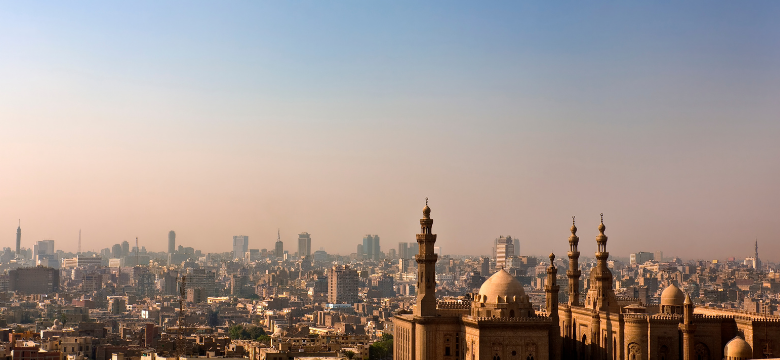
Cairo is the capital and largest metropolitan area in Egypt, home to 20 million people. This bustling metropolis is home to the most famous educational centers and sites, like Al Azhar University. Furthermore, UNESCO has ranked it a world heritage site for its many magnificent structures, such as mosques and temples, that dominate the skyline.
Alexandria
The city of Alexandria is known for its seaport and manufacturing development. Also, the all-time popular Alexandria library was reestablished as 'Bibliotheca Alexandrina.' Furthermore, tourists can explore attractions like the famous National Museum or landmarks such as Fort Qaitbey, which was initially built under Diocletian's reign to protect seaward approaches from Egypt. In addition, visitors can shop on the Corniche by viewing different restaurants along this animated waterfront boulevard, especially in the evening, with locals playing drums while sitting around small fires at night!
Luxor
As one of Egypt's most famous and popular tourist destinations, Luxor is a city that has built its fame on millennia of history. Walking through this ancient town feels like stepping into an entirely different world from ours. You can visit some amazing sites here, such as The Temple Of Karnak, which was used to worship god Amon-Ra during Ancient Egyptian times, or see his name inscribed onto column after column inside its hallways; you could also check out Luxor Museum with all sorts of artifacts displaying life and culture 3000 years ago! It doesn't matter what your interests are - if they're related to historical architecture, then explore at least part of the many fascinating buildings around town while visiting Luxor.
Hurghada
Hurghada is not like other major cities. Unlike its natural beauty, it consists of beautiful beaches where tourists can experience the thrill of snorkeling while exploring this paradise on earth!
Current situation
Egypt's economic development is rising, and President Abdel Fattah el-Sisi has led the charge. His progressive policies have helped make Egypt one of the fastest-developing countries at a time when many other nations are struggling to maintain stability. The government deserves recognition for its courage during this pandemic and for all the efforts that went into these successful developments.
Conclusion
If you are looking to get away from the daily grind and need some time exploring, contact our Egypt travel specialists. They will help you plan your vacation with their extensive knowledge of Egyptian history, geography, and attractions. Our team is happy to answer any questions about planning a trip in this region! Interested in visiting? Contact us now for more information on everything we can do for you during your stay here, or so that we can chat about what kind of adventure might suit your needs best. We look forward to hearing from you soon!