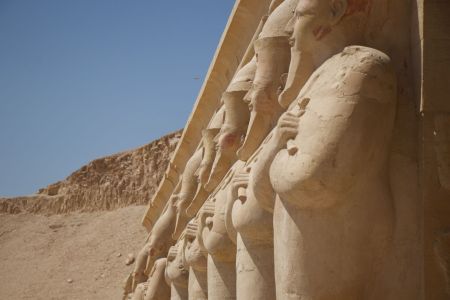
Hatshepsut, daughter of King Thutmose I and Queen Ahmose, became pharaoh after her husband's death, initially ruling as regent for the young Thutmose III.
Her reign lasted over two decades, marked by stability, prosperity, and successful trade missions, notably to the Land of Punt.
She embarked on ambitious construction projects, including the famed Mortuary Temple at Deir el-Bahri and numerous prominent obelisks.
Later rulers attempted to erase her legacy, but modern research highlights her significant impact on Egypt’s history.
Hatshepsut likely died around 1458 BC, possibly from bone cancer and complications following dental treatment.