Battle of Kadesh: Ramses II's Legendary Clash with the Hittites
The Battle of Kadesh stands as one of the most unforgettable confrontations of the ancient world. Fought in 1274 BCE between Pharaoh Ramses II of Egypt and King Muwatalli II of the Hittite Empire, this colossal clash unfolded near the city of Kadesh on the Orontes River—modern-day Syria. As two superpowers wrestled for dominance, the outcome of the Battle of Kadesh shaped political boundaries, military tactics, and diplomacy for centuries. This monumental encounter not only showcased strategic brilliance but also marked the first recorded peace treaty in human history.
For Egypt, this battle was as much about pride as power. Ramses II, often called the “Warrior Pharaoh,” sought to cement Egypt’s dominance after decades of foreign incursions. On the flip side, the Hittites aimed to preserve their control over lucrative trade routes and vassal states in the Levant. The Egypt 19th Dynasty saw this conflict as both a military and ideological campaign, with Ramses II immortalizing his heroism through temple inscriptions and grand monuments. The echoes of Kadesh resound through time, embodying the eternal tension between ambition, courage, and fate.
Historical Context and Causes of the Battle of Kadesh
The roots of the Battle of Kadesh stretch deep into the tangled web of Near Eastern politics. The Egyptian Empire, rejuvenated under the 19th Dynasty, sought to reclaim territories once held by Thutmose III. Meanwhile, the Hittites of Anatolia expanded aggressively into Syria, bringing them face to face with Egyptian interests. The city of Kadesh—strategically perched along trade routes connecting Mesopotamia, Anatolia, and Egypt—became the ultimate prize.
Prior to the confrontation, both empires had engaged in smaller skirmishes across the Levant. Egyptian military campaigns into Canaan and Amurru highlighted Ramses II’s fiery ambition. But when the Hittites seized Kadesh, tensions reached boiling point. Thus began one of the most meticulously documented battles of antiquity, where propaganda, pride, and political maneuvering were as vital as swords and chariots.
Ramses II’s March to Kadesh
In the fifth year of his reign, Ramses II mobilized a massive army divided into four divisions—Amun, Ra, Ptah, and Set. Each bore the name of a revered god, symbolizing divine favor. As Ramses advanced northward through Canaan, he relied heavily on scouts and spies for intelligence. Yet, the Hittites had their own tricks up their sleeve. Deceptive Hittite agents misinformed the Egyptians, convincing Ramses that the enemy was far away. In truth, Muwatalli’s forces lay concealed behind Kadesh, ready to ambush.
The Egyptian army’s route mirrored significant trade paths that modern travelers might follow on Egypt Nile Cruises or Egypt Day Tours. Every step northward was a march through history, a path connecting ancient warfare with the enduring landscape of Egypt’s empire.
The Hittite Ambush and Chaos on the Battlefield
The Hittites struck without warning. Their chariots, numbering over 3,000, thundered across the plains of Kadesh, smashing into the unprepared Egyptian Ra division. The chaos was immense—dust clouds, shattered spears, and cries of battle filled the air. Ramses II, isolated from his main forces, found himself in grave peril. Yet, his courage turned the tide. According to Egyptian inscriptions, the Pharaoh personally rallied his troops and launched a counterattack that stunned the Hittite offensive.
Modern historians debate the scale of Ramses’ victory. While Egyptian records glorify his heroism, Hittite sources suggest the outcome was indecisive. Regardless, Ramses’ dramatic rescue of his soldiers became one of the most celebrated moments in military legend, forever immortalized in temples like Abu Simbel and Thebes.
The Aftermath and the World’s First Peace Treaty
Neither side emerged as a clear victor. The Battle of Kadesh ended in a stalemate, but its consequences rippled through the ancient Near East. Years later, both empires—drained by constant warfare—signed a peace treaty around 1258 BCE, the first of its kind in recorded history. This treaty established mutual recognition of sovereignty, trade agreements, and a non-aggression pact. Astonishingly, replicas of this accord survive today in both Egypt and modern Turkey.
This landmark in diplomacy marked a turning point in human history. It paved the way for political cooperation and influenced later diplomatic traditions. The legacy of Kadesh proves that even amidst conflict, humanity seeks resolution and peace.
The Battle’s Influence on Egyptian Culture and Art
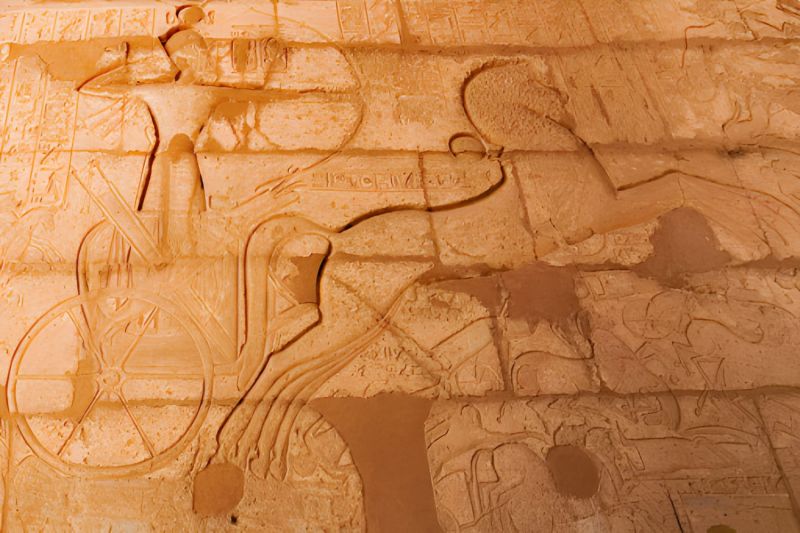
Ramses II’s depiction of Kadesh wasn’t just historical—it was political theater. The Pharaoh ordered vivid reliefs carved into temple walls across Egypt, portraying him as the lone warrior defeating the Hittites single-handedly. These inscriptions, found at the temples of Luxor and Abu Simbel, served as ancient propaganda, reinforcing his divine kingship and military prowess.
Travelers exploring the Luxor Day Tours can still marvel at these narratives today. Each scene reveals intricate artistry and storytelling that rival modern cinematic drama. Beyond artistic legacy, the battle also influenced Egyptian chariot design, tactics, and logistics for generations.
The Military Innovations of Kadesh
One of the most astounding aspects of the Battle of Kadesh lies in its military technology. Both Egyptians and Hittites fielded thousands of chariots, marking one of the largest chariot battles ever fought. The Egyptians utilized faster, lighter vehicles manned by two soldiers, while the Hittites employed heavier, three-man chariots for shock impact.
These innovations reshaped ancient warfare. The command structures, intelligence networks, and battlefield communication employed during Kadesh were precursors to organized military systems found centuries later. It’s no exaggeration to say that the Battle of Kadesh set the stage for the evolution of ancient and even modern warfare.
Diplomacy and the Legacy of Peace
The aftermath of Kadesh transformed international relations. Ramses II’s decision to negotiate rather than annihilate his rival was radical for its time. The formal peace treaty—etched onto silver tablets—symbolized a new era of diplomatic wisdom. It acknowledged the futility of endless conflict and established a framework for coexistence between superpowers.
To this day, replicas of the treaty are displayed at the United Nations Headquarters in New York, symbolizing humanity’s enduring quest for peace. Visitors inspired by Egypt’s long history of diplomacy can explore related artifacts in The Egyptian Museum Of Cairo, where ancient alliances and royal decrees still narrate stories of civilization’s rise.
Modern Interpretations and Archaeological Discoveries
Archaeological excavations have continually shed light on the events at Kadesh. Scholars have uncovered fragments of Hittite archives in Hattusa and Egyptian reliefs describing strategic formations. Modern historians agree that both sides exaggerated their victories, but the factual core remains: Kadesh was a contest of brilliance, bravery, and resilience.
Modern Egyptologists, often traveling alongside visitors on Egypt Travel Packages or Luxury Nile Cruises, explore these connections to uncover how Ramses II’s propaganda shaped his divine legacy. The blend of fact and mythology surrounding Kadesh continues to captivate scholars, ensuring its place as one of the most studied battles in ancient history.
Frequently Asked Questions About the Battle of Kadesh
What was the main cause of the Battle of Kadesh?
The main cause of the Battle of Kadesh was the struggle between Egypt and the Hittite Empire for control over territories in Syria, especially the fortress city of Kadesh. Each empire aimed to dominate the trade routes and regional power dynamics, sparking a fierce rivalry that culminated in this historic clash.
Who won the Battle of Kadesh?
The Battle of Kadesh ended in a stalemate. Both Ramses II and Muwatalli II claimed victory, yet neither achieved total dominance. Despite heavy casualties, the conflict eventually led to the signing of the earliest known peace treaty, signifying mutual respect and political balance.
Where did the Battle of Kadesh take place?
The battle occurred near the ancient city of Kadesh, located along the Orontes River in modern-day Syria. Its strategic position made it a vital military and commercial hub connecting Egypt, Anatolia, and Mesopotamia.
What was the significance of the Battle of Kadesh?
The Battle of Kadesh holds immense historical significance as the first recorded battle in detail and for producing the world’s earliest peace treaty. It showcased advanced military strategies, diplomacy, and the importance of propaganda in ancient leadership.
How did the Battle of Kadesh influence Ramses II’s legacy?
The battle elevated Ramses II’s reputation as a heroic and divine ruler. Through temple reliefs and inscriptions, he immortalized his bravery and leadership, strengthening his political image and solidifying his legacy as one of Egypt’s greatest pharaohs.
Seeing these sites in person brings their stories to life. Explore our Cairo day tours and Egypt travel packages.