Who Is Meritamen? The Enigmatic Egyptian Princess of the 19th Dynasty
Meritamen, sometimes spelled Merytamen or Merit-Amon, stands as one of ancient Egypt’s most intriguing royal women. Her name translates to ‘Beloved of Amun,’ a title reflecting both devotion to the chief deity Amun and her noble lineage. As the daughter—and possibly the wife—of the mighty Pharaoh Ramses II, also known as Ramses the Great, Meritamen’s life was woven into the fabric of Egypt’s golden age. Her story, preserved through statues, temples, and inscriptions, still captivates Egyptologists and travelers alike who explore the wonders of ancient Thebes and Abu Simbel. To grasp who Meritamen was is to uncover the essence of female power, divine beauty, and royal prestige in the ancient world.
During the New Kingdom, particularly the 19th Dynasty, Egypt reached unprecedented heights of architectural and cultural splendor. Meritamen’s image and titles offer a rare glimpse into the role of royal women in a patriarchal society. She wasn’t merely a princess hidden behind palace walls—she was a symbol of fertility, divinity, and dynastic continuity. From magnificent statues in Luxor to divine representations alongside Ramses II at Abu Simbel, Meritamen embodied the powerful intersection between femininity and divine kingship. Her life continues to inspire scholars, travelers, and enthusiasts captivated by Egypt’s enduring legacy.
The Royal Lineage of Meritamen: Daughter of Ramses II and Nefertari
Meritamen was born into one of Egypt’s most influential royal families. Her father, Ramses II, reigned for over sixty years and left behind a monumental legacy, while her mother, Queen Nefertari, remains celebrated as one of the most exquisite women in Egyptian history. Like her mother, Meritamen’s beauty and grace were immortalized in statues and carvings that adorn temples across the Nile Valley. As the daughter of two of the most prominent figures in Egyptian history, Meritamen inherited both allure and political significance.
Many of Ramses II’s children held religious and administrative roles within the kingdom. Meritamen, however, ascended beyond typical royal duties; she was honored with the title ‘Great Royal Wife,’ possibly upon her mother’s death. This title placed her in a position of ceremonial importance beside her father, symbolizing the preservation of divine order. Statues depicting her standing beside Ramses II emphasize her elevated status and the unique bond they shared as both daughter and consort—a practice not uncommon in the complex royal traditions of ancient Egypt.
Meritamen’s Role in Egyptian Religion and Rituals
Religion was at the heart of Egyptian society, and Meritamen’s name itself was a devotional statement. As ‘Beloved of Amun,’ she was linked to the god of creation and kingship. Her religious function extended beyond her name; she likely participated in temple rituals, processions, and offerings that reinforced Egypt’s divine hierarchy. Her depictions at the Nile River temples highlight her importance in ensuring balance between gods, king, and people.
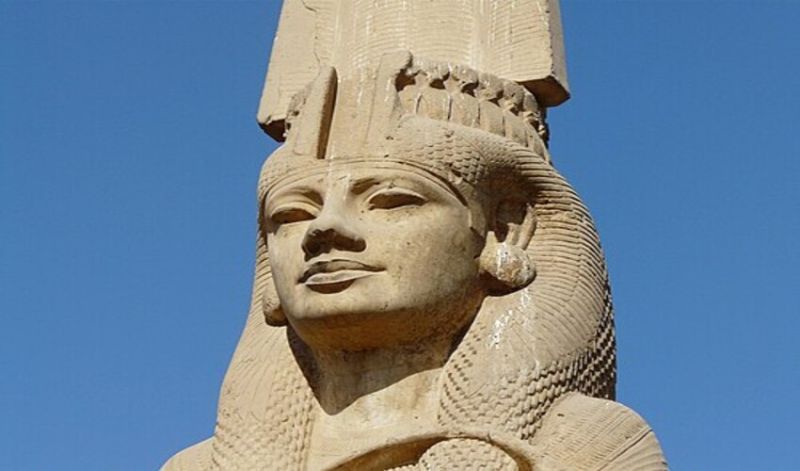
Temples like Abu Simbel and the Ramesseum preserve her image in iconic poses typical of divine queenship—standing gracefully behind Ramses II, holding symbolic scepters, or wearing a vulture headdress representing protection. Meritamen’s portrayal alongside deities such as Hathor and Isis reveals how royal women often acted as earthly embodiments of goddesses. Her presence at these sacred sites ensured that her influence extended across time, linking her spiritual essence with the eternal life of the pharaoh.
The Artistic Legacy of Meritamen: Statues and Temples
Meritamen’s legacy endures in stone. Among her most renowned representations is the colossal statue at Abu Simbel, where she stands near Ramses II—an eternal testimony to her prominence. Her likeness also graces the Ramesseum at Thebes, with intricate carvings capturing every fold of her royal attire and serene facial expression. These artistic masterpieces not only celebrated her beauty but also immortalized her role as a link between divine and mortal realms.
Visiting the temples of Luxor and Thebes through modern Luxor Day Tours gives travelers a firsthand look at these monuments. Walking among colossal statues and hieroglyphs, one can almost hear the echoes of ancient ceremonies where Meritamen once stood as a living goddess. Her statues, carved with precision, highlight the Egyptian mastery of symbolism—each curve and inscription narrates her story of royal devotion and eternal life.
Meritamen’s Tomb and Afterlife Beliefs
Like many members of the royal family, Meritamen was granted a grand resting place in the Valley of the Queens. Her tomb, QV68, discovered in the 20th century, reveals stunning wall paintings and inscriptions celebrating her noble lineage and divine journey into the afterlife. The colorful murals depict her adorned in fine linen garments, receiving offerings, and standing before gods such as Osiris and Hathor.
These images not only honor her earthly status but also affirm the Egyptian belief in immortality. The tomb’s lavish artistry reflects the queen’s importance and the devotion of those who sought to secure her eternal peace. Her tomb’s discovery offered invaluable insights into the funerary practices of the 19th Dynasty, echoing the splendor of other royal burials seen during Egypt Nile Cruises explorations near Luxor and Aswan.
Symbolism and Legacy: The Enduring Influence of Meritamen
Meritamen’s enduring significance lies in her representation of divine femininity and royal continuity. Her statues, tombs, and inscriptions embody the Egyptian concept of Ma’at—balance, order, and harmony. Through her, the Egyptians celebrated the cyclical connection between gods, kings, and queens. She bridged mortality and divinity, ensuring that the power of her father’s reign resonated across generations.
Travelers today can trace her footsteps through remarkable landmarks like the Ramesseum, Abu Simbel, and Thebes. These destinations are accessible through curated Egypt Travel Packages and Luxury Nile Cruises that blend history with breathtaking beauty. Each journey through these sites unveils new dimensions of Meritamen’s world—where art, religion, and royal identity intertwine seamlessly along the sacred banks of the Nile.
The Feminine Power of Meritamen in Egyptian Society
In a world dominated by pharaohs and priests, Meritamen stood as living proof of women’s influence in ancient Egypt. As queen, she wielded ceremonial authority and spiritual influence that balanced her father’s political might. Her images reveal a woman of grace and confidence, embodying ideals of motherhood, fertility, and divine beauty that shaped Egyptian cultural values for centuries.
Her story contributes to modern understanding of gender dynamics in ancient Egypt—a society that revered women’s roles in both earthly and celestial domains. Meritamen’s name remains synonymous with divine love, royal devotion, and enduring legacy, inspiring countless studies and documentaries exploring Egypt’s golden age.
Frequently Asked Questions About Meritamen
Who was Meritamen in ancient Egypt?
Meritamen was a princess and later Great Royal Wife of Pharaoh Ramses II during the 19th Dynasty. She was the daughter of Ramses II and Queen Nefertari, celebrated for her beauty, devotion to the gods, and significant role in royal ceremonies. Her name, meaning ‘Beloved of Amun,’ epitomizes her deep spiritual connection and high status in Egyptian society.
Where can Meritamen’s statues be found?
Statues of Meritamen can be found at Abu Simbel and the Ramesseum in Thebes. These colossal monuments depict her beside Ramses II, emphasizing her royal importance. Visitors can see them during well-planned Aswan Day Tours or Nile cruises that explore Egypt’s ancient temple complexes.
What does Meritamen’s name mean?
The name Meritamen, or Merytamen, translates to ‘Beloved of Amun.’ It reflects her divine association with Amun, the supreme god of Thebes, symbolizing her role as an intermediary between the divine and mortal realms.
Where is Meritamen buried?
Meritamen’s tomb, designated QV68, lies within the Valley of the Queens near Luxor. Its beautifully preserved decorations depict her journey into the afterlife, offering invaluable insights into 19th Dynasty funerary art. Visitors exploring this region through Luxor Day Tours often include this site in their itineraries.
Why is Meritamen significant in Egyptian history?
Meritamen symbolizes the divine femininity and royal authority of ancient Egypt. As both daughter and consort of Ramses II, she held a unique position that blended political, religious, and symbolic power. Her depictions across temples and tombs remain vital to understanding Egyptian beliefs about kingship, divinity, and the afterlife.