The Fascinating Ancient Ritual: What Are The 7 Steps Of Mummification?
The process of mummification in ancient Egypt was a sacred, intricate art that reflected the Egyptian belief in the afterlife and the immortality of the soul. To the ancient Egyptians, death wasn’t an end but a transition to a new existence. This belief sparked one of the most extraordinary practices in human history — the preservation of the body through mummification. Understanding what are the 7 steps of mummification gives us a glimpse into a civilization obsessed with eternity, spirituality, and divine perfection.
The process lasted about seventy days, involving priests, embalmers, and rituals dedicated to gods like Anubis, the god of mummification. The purpose was simple yet profound: to prepare the deceased for the afterlife so their ‘ka’ and ‘ba’—two vital aspects of the soul—could reunite. From the removal of internal organs to the final wrapping, each step was performed with precision and reverence. Today, archaeologists and historians continue to uncover the mysteries behind these techniques, revealing not only their advanced understanding of anatomy but also their deep spiritual convictions.
For those who’ve walked through the halls of The Egyptian Museum of Cairo or gazed upon the tombs of kings in the Valley of the Kings, the allure of mummification remains awe-inspiring. Let’s peel back the linen layers of time and explore in depth the seven crucial steps of ancient Egyptian mummification.
1. Purification of the Body – The Sacred Cleansing
The first step in the mummification process was purification. The body of the deceased was thoroughly washed with water from the Nile River, considered a divine source of life and rebirth. This cleansing symbolized the removal of earthly impurities, preparing the deceased for eternal life. The priests and embalmers, often donning masks of Anubis, performed prayers and rituals to bless the spirit. This purification marked the transition from mortality to divine transformation, a vital first act in preserving the body for eternity.
2. Removal of Internal Organs – The Art of Preservation
Next came the removal of internal organs, a step crucial for preventing decay. Organs that were prone to decomposition—such as the stomach, intestines, lungs, and liver—were carefully extracted through an incision on the left side of the abdomen. Each organ was then washed, dried using natron (a natural salt), and placed into canopic jars guarded by the four sons of Horus. The heart, believed to be the seat of intelligence and emotion, was typically left inside the body to face judgment in the afterlife. The brain, however, was extracted through the nostrils using special hooks, as it was considered unnecessary for the afterlife.
3. Dehydration with Natron – The Essence of Preservation
Once the organs were removed, the body was covered and filled with natron, a naturally occurring salt mixture found in Egypt’s desert regions. This substance absorbed moisture and fat, effectively drying out the body. The process lasted about 40 days, ensuring that every trace of fluid was removed. Dehydration prevented decay and left the body firm and preserved for centuries. Without natron, the art of mummification would have been impossible. This meticulous drying process was a cornerstone of the Egyptians’ unmatched preservation techniques.
4. Stuffing and Shaping the Body – Restoring Humanity
After the dehydration period, embalmers removed the natron and began reshaping the body to give it a lifelike appearance. They stuffed the cavities with linen, sawdust, or even aromatic resins to restore volume and maintain the deceased’s natural form. This step symbolized the reconstitution of life and beauty. Sometimes, artificial eyes or painted stones were inserted to complete the illusion of vitality. The goal was not merely to preserve a corpse but to prepare a divine vessel for the soul’s eternal journey.
5. Anointing and Wrapping – The Ritual of Eternal Protection
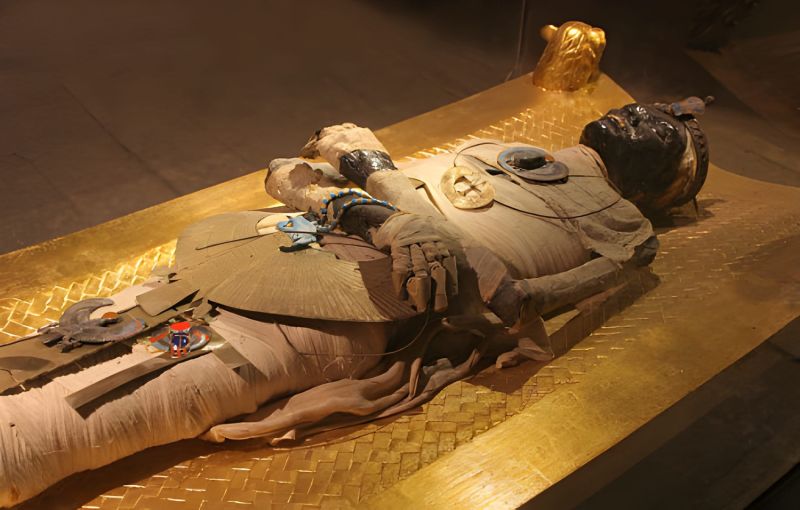
The next stage involved anointing the body with sacred oils, resins, and unguents. These substances were not only fragrant but also antibacterial, offering further protection against decay. The priests then wrapped the body carefully in hundreds of yards of fine linen. Amulets were placed between the layers, each with magical spells intended to safeguard the deceased in the afterlife. The wrapping process was accompanied by chants and recitations from the “Book of the Dead,” invoking divine blessings. The result was a perfectly wrapped mummy, ready to endure eternity.
6. Placing in the Sarcophagus – Symbol of Divine Rest
Once fully wrapped, the mummy was adorned with a death mask, often made of gold and precious stones, symbolizing godlike beauty and protection. The mummy was then placed inside multiple coffins, each elaborately decorated with inscriptions and symbols. The outermost coffin, commonly known as the sarcophagus, represented the house of eternity. These coffins were masterpieces of art and faith, ensuring that the deceased’s identity remained intact forever. Visitors can witness many such beautifully preserved examples in the National Museum of Egyptian Civilization.
7. The Funeral and Final Entombment – Journey to the Afterlife
The final step of mummification was the funeral ceremony, a grand affair attended by family, priests, and mourners. The ritual known as the “Opening of the Mouth” was performed to restore the deceased’s senses for the afterlife. This symbolic act allowed them to eat, see, and speak once more. Offerings, prayers, and chants followed as the body was placed in its tomb, surrounded by treasures, food, and possessions to accompany the soul into eternity. The tomb, often richly decorated, became a gateway between the world of the living and the realm of the gods.
The Symbolic Meaning Behind Mummification
Mummification wasn’t just a physical process; it was deeply spiritual. Every step reflected the Egyptian philosophy of life, death, and rebirth. They believed that preserving the body ensured that the soul could live eternally among the gods. This spiritual science was intertwined with mythology, ritual, and art, defining an essential part of Egyptian identity that still captivates the world today. When exploring ancient sites during Luxor Day Tours or while sailing the Egypt Nile Cruises, travelers feel this timeless connection to the ancient afterlife beliefs.
The Legacy of the Mummification Process
Even thousands of years later, the mummies of ancient Egypt continue to astonish researchers. Modern technology has enabled scientists to uncover details about health, diet, and even diseases of those long gone. The process that ancient Egyptians perfected remains unmatched in its sophistication. Visitors can explore incredible displays of mummies and artifacts on various Egypt Travel Packages, connecting the past with the modern world in a profound way.
Frequently Asked Questions About the 7 Steps of Mummification
1. Why did ancient Egyptians mummify their dead?
Ancient Egyptians believed that preserving the body was vital for the soul’s immortality. Mummification allowed the deceased’s spiritual essence to recognize its body in the afterlife and continue its eternal journey among the gods.
2. How long did the mummification process take?
The complete process took approximately seventy days. It involved drying the body with natron, performing rituals, wrapping with linen, and conducting sacred ceremonies before entombment.
3. What materials were used for mummification?
Key materials included natron for drying, linen for wrapping, resins for anointing, oils for preservation, and amulets for spiritual protection. These materials played both practical and symbolic roles in ensuring eternal life.
4. Were all Egyptians mummified?
No, mummification was primarily reserved for pharaohs, nobles, and the wealthy. However, over time, simplified versions of the process became accessible to commoners depending on their social status and resources.
5. Where can we see real mummies today?
Authentic mummies can be viewed in museums around the world, with some of the most significant collections found in Egypt at The Egyptian Museum of Cairo and the National Museum of Egyptian Civilization. These institutions preserve and display mummies with immense historical and cultural reverence.