The Magnificent Statue of Ramses II: Egypt’s Eternal Monument of Power
The Statue of Ramses II stands as one of the most awe-inspiring icons of ancient Egyptian civilization, capturing the grandeur, ambition, and divine self-image of Egypt’s most celebrated pharaoh. Towering in scale and steeped in history, this colossal sculpture embodies the might of Ramses the Great, who reigned during the Egypt 19th Dynasty. From the sands of Luxor to the temples of Abu Simbel, the legacy of Ramses II dominates pharaonic art and continues to mesmerize historians, travelers, and archaeologists alike. The statue, carved from a single block of stone, is not merely a portrait—it’s a timeless proclamation of power, divinity, and cultural sophistication that shaped the identity of ancient Egypt for millennia.
Today, the Statue of Ramses II remains a centerpiece of countless Cairo Day Tours and an unmissable highlight for those embarking on Egypt Travel Packages. The statue’s delicate craftsmanship, regal posture, and symbolic inscriptions narrate a story of conquest, devotion, and eternal life. As travelers stand before this massive figure, they witness not only an artistic masterpiece but also the timeless message of a ruler who sought immortality through stone. To truly understand the spirit of ancient Egypt, one must stand before the Statue of Ramses II and feel the quiet authority that radiates from its monumental form.
Historical Significance of the Statue of Ramses II
The historical significance of the Statue of Ramses II goes far beyond its artistic grandeur. It reflects the pharaoh’s political and spiritual ideology during a golden age of prosperity and expansion. Ramses II, often called Ramses the Great, ruled Egypt for over sixty years—a reign unmatched in longevity and influence. His colossal statues were strategically placed across Egypt to showcase divine power and legitimacy, reinforcing the concept of the pharaoh as a god-king on earth. The most famous of these, once guarding the entrance of the Ramesseum in Thebes, was a symbol of imperial strength and divine favor.
Ramses II’s statues, particularly the one now located in Ramses Square (formerly at Mit Rahina near the ancient city of Memphis), served as political propaganda and a representation of eternal rule. They were meant to communicate strength not only to his subjects but also to foreign emissaries who entered Egypt’s sacred heart. This legacy continues to shape modern Luxor Day Tours, where visitors can explore the same temples and monuments that once celebrated Egypt’s mightiest ruler.
Artistic Features and Iconography of the Statue
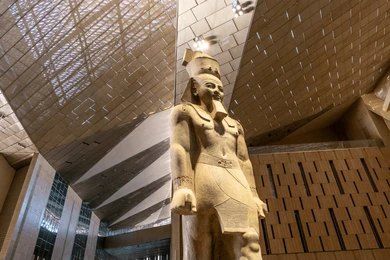
The Statue of Ramses II perfectly embodies the balance between artistic mastery and religious symbolism that defined ancient Egyptian sculpture. Standing over 30 feet tall, the statue was carved from red granite, a material symbolizing strength and eternity. The pharaoh’s features—broad shoulders, serene face, and regal posture—convey both physical dominance and divine serenity. Every curve and inscription was meticulously designed to immortalize Ramses II’s god-like image.
The headdress, adorned with the double crown of Upper and Lower Egypt, symbolizes unity and authority. His crossed arms hold the crook and flail, emblems of kingship and fertility. The inscriptions carved along the statue’s base praise Ramses II as the ‘Son of Ra,’ asserting his divine lineage. These artistic and religious details are central to understanding ancient Egypt’s worldview, one profoundly influenced by the fusion of art and theology.
The Journey of the Statue: From Memphis to the Modern Age
For centuries, the Statue of Ramses II lay buried under layers of sand in the ancient city of Memphis. Rediscovered in the 19th century, it quickly became one of the most important archaeological finds in Egyptian history. The statue’s relocation to central Cairo in the mid-20th century was both a challenge and a triumph, symbolizing Egypt’s commitment to preserving its cultural heritage amidst modernization. Its final move to the Grand Egyptian Museum was a monumental effort combining modern engineering with historical preservation.
This journey mirrors the enduring fascination with Ramses II’s legacy. Each relocation underscored Egypt’s determination to protect and showcase its ancient wonders to the world. The statue continues to captivate visitors, many of whom include it in their itinerary as part of Egypt Nile Cruises or Luxury Egypt Tours, bridging the gap between the ancient and the contemporary.
Ramses II’s Influence on Egyptian Art and Architecture
Ramses II’s influence extended far beyond his statues. His reign marked a renaissance in Egyptian architecture, with monumental temples, obelisks, and sculptures that celebrated the divine role of the pharaoh. The temples of Abu Simbel, carved directly into rock, are among the most striking examples of this artistic vision. These grand projects weren’t merely decorative—they were declarations of power, faith, and unity.
Many of the motifs seen in the Statue of Ramses II became blueprints for later pharaonic art. The symmetrical form, idealized proportions, and spiritual symbolism inspired generations of artisans. Modern travelers exploring Egypt’s wonders through Aswan Day Tours or Lake Nasser Cruises can trace these artistic legacies throughout temples and tombs that still bear Ramses II’s name.
The Modern Legacy of the Statue of Ramses II
In modern Egypt, the Statue of Ramses II serves as a cultural icon and a national treasure. It symbolizes Egypt’s enduring identity as a cradle of civilization and innovation. Scholars regard it as an invaluable historical record, revealing insight into Egyptian craftsmanship, religion, and royal ideology. For tourists, it offers a tangible link to an age when pharaohs were gods and monuments were messages to eternity.
In contemporary Cairo, the statue’s presence near cultural landmarks like The Egyptian Museum Of Cairo and Giza City enhances its accessibility and appeal. Whether admired under museum lighting or imagined in its original temple setting, the statue remains a symbol of Egyptian heritage and the timeless allure of antiquity.
Why the Statue of Ramses II Captivates Modern Travelers
What makes the Statue of Ramses II so captivating to modern travelers is its combination of beauty, mystery, and historical resonance. Every detail tells a story—from its regal expression to the inscriptions that whisper of divine kingship. For those embarking on Best Egypt Vacation Packages or seeking immersive Egypt Private Tours, standing before this statue is like stepping back into the age of gods and empires.
The statue’s preservation is a testament to Egypt’s dedication to history. It continues to inspire artists, historians, and even engineers who marvel at the ancient techniques used to craft and transport such immense works. Indeed, the Statue of Ramses II is not just a relic—it’s a living dialogue between past and present, a symbol of human ambition and artistic genius that defies time itself.
Frequently Asked Questions About the Statue of Ramses II
Where was the Statue of Ramses II originally located?
The Statue of Ramses II was originally located in the ancient city of Memphis, near modern-day Mit Rahina. It once stood at the entrance of the great temple dedicated to Ptah, Egypt’s creator god. Today, the statue has been relocated and preserved within the Grand Egyptian Museum in Giza.
What material was used to carve the Statue of Ramses II?
The statue was carved from a single block of red granite quarried from Aswan. This choice of material symbolized strength, permanence, and divine authority, ensuring the pharaoh’s image would endure for eternity.
How tall is the Statue of Ramses II?
The statue originally stood about 30 feet tall (approximately 10 meters). Even in its current reclining position, its immense size continues to astonish visitors and archaeologists alike.
Why is Ramses II considered one of Egypt’s greatest pharaohs?
Ramses II earned his title as ‘Ramses the Great’ due to his military achievements, architectural marvels, and long reign. He secured Egypt’s borders, commissioned monumental temples like Abu Simbel, and left behind more statues and structures than any other pharaoh in history. His enduring legacy can also be traced through the Battle Of Kadesh, one of the most famous military campaigns of the ancient world.
Can visitors see the Statue of Ramses II today?
Yes, visitors can see the Statue of Ramses II displayed prominently in Cairo. It remains a focal point for travelers exploring Egypt through various Egypt Tours or Best Nile River Cruises. Its preservation and accessibility make it one of Egypt’s most remarkable attractions for history enthusiasts worldwide.
Related reading: Who Was Queen Meritamen?