Why Did the Egyptians Build Pyramids: Unraveling the Sacred Purpose Behind Ancient Egypt’s Timeless Monuments
The pyramids of Egypt, those colossal stone structures rising from the desert sands, are among humanity’s most awe-inspiring achievements. For centuries, they’ve fascinated historians, archaeologists, and travelers alike, prompting one enduring question — why did the Egyptians build pyramids? More than just architectural marvels, these pyramids were the beating heart of ancient Egyptian civilization, serving as eternal monuments to their gods, kings, and beliefs about the afterlife. The ancient Egyptians viewed death not as an end but as a transition to another realm, and the pyramid was the ultimate bridge between earth and the divine. Built with precision, faith, and celestial alignment, these majestic tombs expressed both spiritual devotion and political dominance. Today, they remain symbols of Egypt’s grandeur, attracting countless visitors on unforgettable Egypt Tours.
Constructed over 4,000 years ago, the pyramids represent more than burial sites — they are eternal symbols of power, religious belief, and cosmic order. In this article, we’ll decode the true purpose behind pyramid construction, exploring their religious significance, connection with pharaohs, architectural innovation, and enduring legacy. Whether you’re planning Cairo Day Tours or a Nile Cruise, understanding why the Egyptians built pyramids adds profound meaning to every stone you see.
The Pyramid as a Gateway to Eternity
At its core, the pyramid was a sacred gateway to eternity. The ancient Egyptians believed in an afterlife where the soul of the deceased would live forever among the gods. Pharaohs, considered divine, needed a suitable dwelling for this eternal journey. The pyramid’s design — with its ascending slopes — symbolized the soul’s path to the heavens, particularly toward the sun god Ra. Each block, meticulously placed, embodied devotion to ensuring the pharaoh’s safe passage to immortality. This belief in the afterlife formed the foundation of Egypt’s spiritual and political identity, cementing the pyramid’s role as the ultimate celestial ladder.
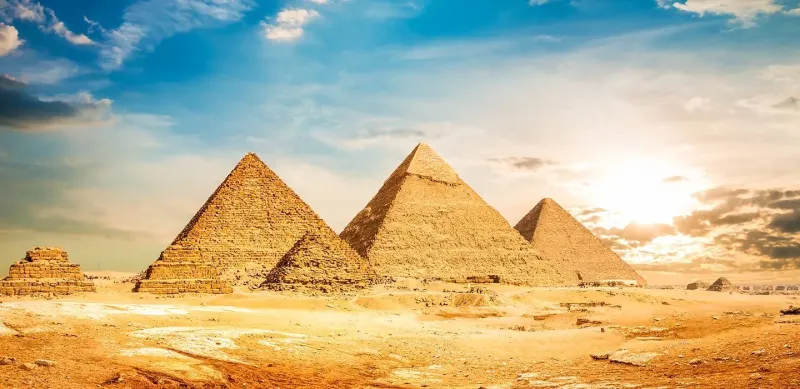
Many pyramids were built near The Nile River, whose life-giving waters mirrored the cycle of rebirth. The annual flooding of the Nile inspired Egyptians to see renewal in every ending, reinforcing their vision of death as a continuation. Thus, the Great Pyramids of Giza became both tombs and timeless symbols of resurrection.
Pharaohs and Divine Power: The Political Meaning Behind the Pyramids
While the spiritual symbolism is profound, the pyramids also projected immense political power. Each pyramid was an unmistakable declaration of a pharaoh’s godlike authority. Building a pyramid required thousands of laborers, vast resources, and decades of planning — feats only achievable by a ruler commanding total loyalty. Through these grand projects, pharaohs demonstrated their divine legitimacy and control over both nature and people.
Pharaoh Khufu’s Great Pyramid at Giza remains the largest ever built, showcasing unmatched ambition and organizational skill. By immortalizing his reign in stone, Khufu ensured that his name would echo through eternity. For modern travelers exploring Luxury Egypt Tours, standing before his pyramid offers a tangible connection to the profound balance between power and faith that defined ancient Egypt.
The Religious Symbolism of Pyramid Design
Every aspect of pyramid construction carried symbolic weight. The pyramid’s shape, with four triangular sides converging to a point, represented the rays of the sun. This design was no accident; it embodied the Egyptian belief that the king’s soul would ascend to join the sun god Ra in the sky. The internal chambers were precisely aligned with stars and celestial bodies, emphasizing cosmic harmony and divine order — principles central to Egyptian cosmology.
Inside, intricate passages and burial chambers protected sacred treasures, canopic jars, and offerings for the afterlife. These details reveal how the Egyptians combined religion, science, and art into a single architectural expression. Many modern explorers retrace this blend of mystery and mastery through Pyramids and Nile Cruise Holidays, bridging ancient rituals with contemporary adventure.
Engineering Genius and Labor Organization
Beyond spiritual significance, the pyramids reflect astounding engineering brilliance. The Egyptians developed advanced techniques for quarrying, transporting, and aligning massive limestone and granite blocks. Contrary to earlier myths, the pyramids weren’t built by slaves but by skilled workers, farmers, and artisans who labored during the Nile’s flooding season. These workers lived in organized communities, receiving food, housing, and even medical care — evidence of a structured, proud workforce.
The precision with which the pyramids were aligned to cardinal points and celestial bodies demonstrates Egypt’s mastery of mathematics and astronomy. This genius still captivates those who embark on Egypt Adventure Tours to uncover the secrets of ancient engineering. Every block tells a story of dedication, unity, and innovation beyond time.
The Spiritual Role of the Afterlife in Pyramid Construction
For ancient Egyptians, death was merely the beginning of another life. The pyramid was the vessel that carried the pharaoh’s soul into eternity. Inside, priests performed complex rituals to activate the king’s ka (spirit energy), ensuring his rebirth among the gods. Hieroglyphic inscriptions, known as Pyramid Texts, covered the walls, guiding the deceased through the underworld. These texts are among the world’s earliest religious writings, detailing spells and prayers that secured safe passage to the afterlife.
The pyramid thus became a temple of transformation — a bridge between mortal existence and divine immortality. Exploring these sacred symbols today during Luxor Day Tours offers deep insight into how spirituality and engineering intertwined seamlessly in ancient Egypt.
The Legacy of the Egyptian Pyramids in Modern Culture
The influence of the pyramids extends far beyond ancient times. They’ve inspired countless architectural forms, philosophies, and artistic works. More importantly, they remain a powerful emblem of human ambition and faith. Tourists from around the globe still flock to Giza, Saqqara, and Dahshur to marvel at the ingenuity and devotion these monuments represent. The pyramids continue to fuel research, inspiring new theories about construction techniques and uncovering hidden chambers.
Whether you’re tracing the path of ancient kings or cruising the Nile aboard a Luxury Nile Cruise, the pyramids remain an unforgettable testament to human perseverance and divine reverence. They are not just relics of the past but living chapters of human history.
Frequently Asked Questions About Why the Egyptians Built Pyramids
1. What was the main reason the Egyptians built pyramids?
The Egyptians built pyramids primarily as royal tombs for pharaohs and high-ranking officials. They believed the pyramid served as a spiritual gateway for the deceased king to ascend to the afterlife and join the gods. The structure symbolized both divine power and eternal life.
2. Were all pyramids built in the same period?
No, pyramids were built over several centuries, primarily during the Old and Middle Kingdoms. The earliest known pyramid, Djoser’s Step Pyramid at Saqqara, dates back to around 2630 BCE. The most famous pyramids at Giza followed about a century later, during Egypt’s Fourth Dynasty.
3. How did the Egyptians move the massive stones used in the pyramids?
Recent archaeological evidence suggests the Egyptians used sledges on wet sand to reduce friction and transport massive limestone blocks. Workers likely utilized ramps, levers, and intricate systems of pulleys to position these stones with astonishing precision.
4. Did common Egyptians participate in pyramid construction?
Yes, many workers were not slaves but skilled laborers, farmers, and artisans who worked seasonally while the Nile flooded their fields. They lived in organized worker villages near the construction sites and were provided with shelter, food, and medical care, reflecting the social unity behind these monumental projects.
5. Why are the pyramids of Giza still so significant today?
The pyramids of Giza remain one of the Seven Wonders of the Ancient World and a symbol of Egypt’s cultural identity. Their precision, durability, and spiritual significance continue to captivate millions. They offer insight into the Egyptians’ mastery of engineering, art, and their unshakeable faith in life beyond death — a legacy that endures through every Best Egypt Vacation Package and historical exploration.