
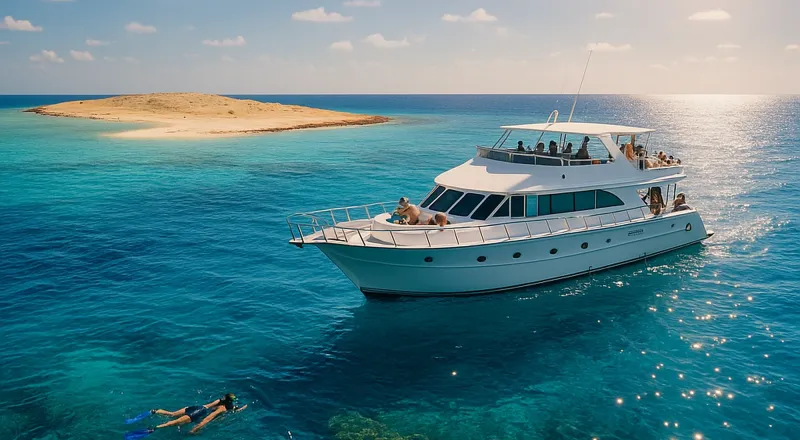
Diving The Brothers Islands And Daedalus Reef: Sharks And Strong Currents
The Brothers Islands and Daedalus Reef are world-renowned dive sites in Egypt’s Red Sea, celebrated for their thrilling shark encounters and powerful currents. These remote offshore reefs offer advanced divers the chance to explore vibrant coral walls, WWII shipwrecks, and deep blue drop-offs teeming with marine life. Divers should expect challenging conditions, but the rewards are some of the most exhilarating underwater experiences in Egypt.
Key Takeaways
- The Brothers Islands and Daedalus Reef are accessible only by liveaboard dive boats departing from Hurghada or Marsa Alam.
- Both sites are famous for encounters with oceanic whitetip, hammerhead, and thresher sharks.
- Strong currents and deep drop-offs make these sites suitable for advanced divers with drift diving experience.
- The Brothers feature two iconic shipwrecks: the Numidia and the Aida, both encrusted with colorful corals.
- Best diving conditions are typically from April to June and September to November, with excellent visibility year-round.
The Allure of Egypt’s Remote Offshore Reefs
Adventure-seeking divers are drawn to the Brothers Islands and Daedalus Reef for their wild, untamed beauty and the promise of unforgettable big fish encounters. Located over 60 kilometers offshore, these sites are far from the reach of day boats, ensuring pristine underwater environments and minimal diver traffic. The sense of isolation and the ever-present possibility of spotting rare pelagic species make every dive here a pulse-raising experience.
If you are planning a Red Sea adventure, consider pairing your diving expedition with a wider Egypt adventure tour to experience both the underwater and cultural wonders of Egypt.
Where Are The Brothers Islands and Daedalus Reef?
The Brothers Islands, known locally as El Akhawein, are two small outcrops—Big Brother and Little Brother—situated about 60 km east of El Quseir. Daedalus Reef (Abu Kizan) lies roughly 80 km offshore from Marsa Alam. Both are only accessible by liveaboard, making them exclusive destinations for serious divers.
What Makes These Sites So Special?
The vertical walls at both sites plunge hundreds of meters into the blue, covered in soft corals, giant sea fans, and swarms of anthias. The Brothers are home to two historic wrecks, while Daedalus is famed for its resident schooling hammerheads and a striking lighthouse perched above the reef. The strong currents bring nutrient-rich waters, supporting a dazzling array of marine life and making each dive an adrenaline-filled adventure.
Shark Encounters: The Red Sea’s Apex Predators
For many divers, the chance to see sharks in their natural habitat is the main draw of these sites. Oceanic whitetip sharks, with their distinctive rounded fins, are frequently spotted cruising in the blue at both the Brothers and Daedalus. Hammerhead sharks, particularly the scalloped variety, often form large schools at Daedalus, especially in the early summer months. Thresher sharks, known for their elongated tails, are also occasional visitors, adding to the excitement.
Those interested in quieter, more beginner-friendly snorkeling experiences may prefer the reefs of Safaga and Soma Bay, but for shark enthusiasts, nothing rivals the Brothers and Daedalus.
Other Marine Life Highlights
Beyond sharks, divers can expect to encounter barracuda, giant trevally, tuna, and swirling schools of fusiliers. Macro lovers will find nudibranchs, shrimps, and the occasional pygmy seahorse among the corals. Turtles, moray eels, and even the rare manta ray round out the cast of underwater residents.
Currents and Conditions: What to Expect
Both the Brothers Islands and Daedalus Reef are famous for their strong, unpredictable currents. These currents are what attract the pelagic life, but they also demand a high level of diving skill. Drift dives are the norm, and divers must be comfortable with negative entries, blue water ascents, and the use of surface marker buoys. Water temperatures range from 22°C in winter to 29°C in summer, with visibility often exceeding 30 meters.
To prepare for the variable weather and sea conditions, review tips about Egypt’s climate throughout the year before booking your liveaboard.
Best Time to Dive the Brothers and Daedalus
April to June and September to November are considered the prime seasons, offering the best balance of pleasant water temperatures, good visibility, and frequent shark sightings. Summer can bring stronger currents and higher water temperatures, while winter offers fewer boats and quieter reefs.
Wreck Diving at the Brothers Islands
Big Brother Island is home to two legendary shipwrecks. The Numidia, a British cargo ship that sank in 1901, rests between 8 and 80 meters on the northern tip of the island, its hull now a living reef encrusted with soft corals. The Aida, an Egyptian supply ship lost in 1957, lies on the western side, draped in vibrant marine life. Both wrecks offer hauntingly beautiful dives for those with deep diving certification.
Liveaboards: The Only Way to Dive These Sites
Due to their remote locations, the Brothers Islands and Daedalus Reef can only be reached by liveaboard dive boats. Most trips depart from Hurghada or Marsa Alam and last 5 to 7 nights, often combining the Brothers, Daedalus, and Elphinstone Reef for a comprehensive Red Sea itinerary. Boats range from comfortable to luxurious, providing all meals, guided dives, and expert safety support.
If you’re new to liveaboard diving, you might consider a scuba diving day tour from Hurghada before tackling these advanced sites.
Sample Liveaboard Itinerary Comparison
| Itinerary | Duration | Main Dive Sites | Departure Port |
|---|---|---|---|
| Brothers & Daedalus Classic | 7 nights | Brothers, Daedalus, Elphinstone | Hurghada or Marsa Alam |
| Ultimate Red Sea | 10 nights | Brothers, Daedalus, Elphinstone, St. John’s | Hurghada |
| Short Brothers Getaway | 5 nights | Brothers only | Marsa Alam |
Who Should Dive the Brothers and Daedalus?
These sites are best suited to advanced divers with a minimum of 50 logged dives, strong buoyancy control, and experience with drift and deep diving. Many liveaboards require proof of Advanced Open Water certification and recent diving activity. The rewards are immense, but safety and comfort should always come first.
If you’re hoping to combine diving with Egypt’s ancient wonders, consider a Pyramids and Nile cruise holiday for a truly unforgettable trip.
Beyond Diving: Exploring Egypt’s Culture and History
While the Brothers and Daedalus are all about underwater adventure, Egypt offers a wealth of cultural treasures on land. After your liveaboard, immerse yourself in Cairo’s bustling streets, visit the ancient Mosque Ibn Tulun, or stroll the historic El Moez Street in Islamic Cairo. These experiences provide a rich contrast to your days spent at sea.
For those interested in extending their journey, a Nile cruise from Aswan offers a serene way to explore the heart of Egypt’s ancient civilization.
Frequently Asked Questions
Do I need advanced certification to dive the Brothers Islands and Daedalus Reef?
Yes, both sites are recommended for advanced divers with experience in deep and drift diving, and most liveaboards require Advanced Open Water certification.
When is the best time to see sharks at these sites?
The peak season for shark sightings is from April to June and September to November, when oceanic whitetip and hammerhead sharks are most active.
How do I reach the Brothers Islands and Daedalus Reef?
The only way to dive these sites is by booking a liveaboard trip departing from Hurghada or Marsa Alam, as they are too far offshore for day boats.
Are there any shipwrecks to explore at these dive sites?
Yes, Big Brother Island features two famous wrecks, the Numidia and the Aida, both of which are accessible to experienced divers with deep diving certification.
What kind of marine life can I expect besides sharks?
In addition to sharks, divers can encounter barracuda, tuna, trevally, turtles, moray eels, and a variety of reef fish and macro life among the vibrant corals.