Eco Tours in Egypt: A Practical Guide to Sustainable Travel Along the Nile, the Desert and the Red Sea
Eco tours in Egypt are trips designed to reduce environmental harm and put money into local communities, and they are best done in three places: the Nile Valley (small boats, village stays), the Western Desert oases (low-impact camping), and Red Sea marine reserves (reef-safe diving and snorkelling). Egypt has 7 UNESCO World Heritage sites, per UNESCO, and the way you travel between them matters as much as where you go.
Key Takeaways
- The Nile Valley, the Western Desert oases and the Red Sea reserves are Egypt's three main eco-tourism zones, each with a different kind of low-impact activity.
- All monument ticket prices on the Ministry's ticketing portal are in Egyptian Pounds (EGP), so budget in the local currency.
- Photography with a mobile phone is free of charge at Ministry sites, which saves you from buying camera permits and encourages travelling light.
- Arrive at least one hour before a site's closing time, and note that reduced Ramadan hours are published per site on the ticketing portal.
- Students need a valid ID and must be aged 24 or under to qualify for the student ticket.
What Makes a Tour in Egypt Genuinely Eco-Friendly?
"Eco tour" is a label that gets applied loosely. In Egypt, a genuine one rests on four habits: small group sizes, locally owned accommodation, transport that avoids unnecessary short flights, and activities that leave no trace. Plastic is the most visible problem, so carrying a refillable bottle and a sun hat counts for more than most people expect. A guide who explains why a site matters, rather than rushing you through it, is usually a sign that the operator takes sustainability seriously.
Practical planning helps as well. Our guide to eco-friendly ways to travel Egypt covers transport, accommodation and packing choices in more detail, and it is a useful companion to the regional ideas below.
Eco Tours Along the Nile Valley
Slow Travel by Water
The Nile is Egypt's original highway, and moving along it by boat is one of the lowest-impact ways to see Luxor, Edfu, Kom Ombo and Aswan. A single cruise replaces several road transfers and domestic flights, and you unpack only once. Look for vessels that treat wastewater properly and avoid single-use plastics, and ask the operator directly about both before booking.
For travellers who want this rhythm on a short schedule, a 3-night Nile cruise covers the classic Luxor to Aswan stretch without extra flights or hotel changes.
Village Life and Farmland
Beyond the temples, the Nile Valley is a working landscape of date palms, sugar cane and small fields watered by canals. Walking or cycling through villages near Luxor and Aswan, and eating in family-run guesthouses, sends tourism income directly to the people who live there. Choose a felucca, the traditional sailing boat, for short river trips: it runs on wind rather than diesel and is quiet enough to hear the birdlife along the banks.
The Aswan High Dam and Lake Nasser
Aswan is the starting point for understanding how the river is managed today. Visiting the High Dam of Egypt shows how one structure reshaped farming, flooding and energy supply across the country. Further south, Lake Nasser is a remote, thinly visited reservoir. A slower option here is the Aswan to Abu Simbel cruise, which keeps visitor numbers low and reaches temples that crowded coach tours rarely touch.
Eco Tours in the Western Desert and Oases
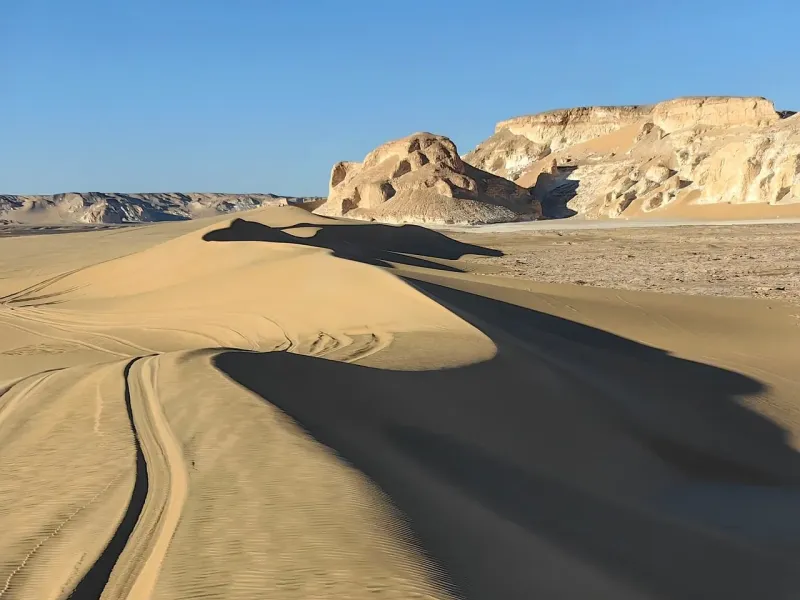
Egypt's Western Desert holds the oases of Siwa, Bahariya, Farafra, Dakhla and Kharga, plus the White Desert, a landscape of chalk rock formations shaped by wind. Desert eco travel works on a simple principle: carry out everything you carry in. Stay on existing tracks, never drive over fragile crusts or fossil beds, and do not remove fossils or rocks as souvenirs. Camping in the White Desert with a licensed local operator keeps fires, waste and noise under control, and Bedouin guides know which areas are fragile and which are safe to cross.
In the oases, staying in mud-brick lodges and eating local produce such as dates and olives keeps spending inside the community. Travel in the cooler months, and bring plenty of water, because distances between settlements are long.
Eco Tours on the Red Sea Coast and Sinai
The Red Sea holds some of the northern hemisphere's healthiest coral reefs, and they are fragile. Responsible snorkelling and diving rests on a few rules that every reputable operator enforces: never touch or stand on coral, never feed fish, keep fins well clear of the reef, and use reef-safe sun protection or a rash vest instead of heavy sunscreen. Choose centres that brief you on reef etiquette before you enter the water and that use fixed mooring buoys rather than dropping anchors on the coral.
Marine protected areas such as Ras Mohammed in Sinai and the islands off Hurghada charge small park or conservation fees. Treat these as part of the cost of keeping the reefs alive, and ask your operator which fees are included in your price.
Eco-Minded Culture: Museums and Monuments
Cultural sightseeing is naturally low-impact when you plan it well. Egypt's museums let you cover thousands of years of history in a single visit, and the Grand Egyptian Museum near the Giza plateau is now the headline stop. Our guide to the Grand Egyptian Museum explains what to see, and the older Egyptian Museum in Cairo remains worth visiting for its dense, traditional displays.
For travellers who want to link the Pyramids and the museum in one efficient day, a private tour of Giza and the Grand Egyptian Museum avoids repeated transfers and keeps your carbon footprint down. Outside Cairo, Memphis, the old capital is a quiet open-air site that rarely feels crowded.
Tickets, Payment and Visiting Rules at Ministry Sites
Knowing the rules in advance makes a low-impact trip smoother. The table below gathers what the Ministry of Tourism and Antiquities and its official ticketing service publish.
| Topic | What the Ministry publishes |
|---|---|
| Ticket currency | All monument ticket prices are in Egyptian Pounds (EGP) |
| Student tickets | Valid student ID required and age must not exceed 24 |
| Free entry | Children under 6; Egyptian seniors 60+; Egyptians with special needs; orphaned children |
| Mobile phone photography | Free of charge |
| Arrival time | At least one hour before the site's closing time |
| Ramadan hours | Reduced hours, published per site on the ticketing portal |
Two further points apply. At the National Museum of Egyptian Civilization, the free-entry exemptions exclude Friday, Saturday and public holidays. And while self-service machines accepting bank cards are reported at Giza, card acceptance is not guaranteed at every site, so carry some cash. Official fees and hours are revised periodically, so confirm the current figures on the official ticketing portal before you go.
Choosing a Trip That Matches Your Values
The most sustainable itinerary is usually the one with fewer moves, smaller groups and local guides. A single-base or cruise-based route reduces transfers, while a private format lets you set the pace and skip crowded hours. Families with children can combine culture and nature in a single plan, such as an Egypt family tour that pairs short drives with relaxed river time. If comfort is a priority alongside sustainability, a luxury Egypt vacation can still be built around small properties and private guides rather than large resorts.
When you compare operators, ask five direct questions: how large the groups are, where the accommodation is owned, how waste is handled, whether local guides are employed, and what happens to conservation fees. Clear, specific answers are a better sign of genuine eco practice than a green logo.
Responsible Behaviour Checklist
On Land
Carry a refillable bottle, take rubbish with you, dress modestly in villages and religious sites, and ask before photographing people. Do not touch painted walls, since oils from skin damage ancient pigments over time. Buy crafts directly from makers instead of from resellers where you can.
On Water and in the Desert
Never touch coral, keep to marked tracks in the desert, and take nothing from the landscape. Avoid drones near protected sites unless your operator has arranged permission, and keep noise low in quiet areas so wildlife and other visitors are not disturbed.
Timing Your Eco Tour
Egypt's cooler months are the most comfortable for walking, cycling and desert camping, while the Red Sea stays swimmable for much of the year. Summer in Upper Egypt is intense, so outdoor activities there are best done early in the morning. If you plan around Ramadan, expect shorter opening hours at sites and a quieter, more local atmosphere. Ministry opening hours for that month are published per site on the ticketing portal.
Entry rules for foreign travellers are set by the authorities and can change, so check the latest requirements before booking. Our article on whether you need a visa to travel to Egypt points you to the right official sources.
Frequently Asked Questions
What is the most eco-friendly way to see Egypt?
Travelling slowly with few transfers is the most eco-friendly approach: a Nile cruise or a single-base itinerary, small groups, local guides, and locally owned accommodation. This avoids repeated short flights and spreads income to local communities.
Are monument ticket prices in Egypt listed in US dollars?
No. Per the Ministry's official ticketing service, all monument ticket prices are in Egyptian Pounds (EGP), so plan to pay in the local currency.
Can I take photos with my phone at Egyptian monuments?
Yes. Photography with a mobile phone is free of charge at Ministry sites, according to the Ministry's official ticketing service. Commercial, TV or cinema filming requires prior permission.
Who qualifies for a student ticket?
Visitors must present a valid student ID, and their age must not exceed 24, per the Ministry's official ticketing service.
Which children and groups enter free at Ministry museums?
Children under 6, Egyptian seniors aged 60 and over, Egyptians with special needs and orphaned children enter free, per the Ministry of Tourism and Antiquities. At the National Museum of Egyptian Civilization these exemptions exclude Friday, Saturday and public holidays.
How early should I arrive at a site before it closes?
Arrive at least one hour before the site's closing time, as recommended by the Ministry's official ticketing service. Ramadan hours are reduced and published per site on the ticketing portal.
How many UNESCO World Heritage sites does Egypt have?
Egypt has 7 UNESCO World Heritage sites, per UNESCO, which gives eco-minded travellers plenty of culture to combine with nature-based days.
Can I pay by card at Egyptian monuments?
Self-service machines accepting bank cards are reported at Giza, per the Ministry of Tourism and Antiquities, but card acceptance is not guaranteed at every site. Carry cash as a backup.